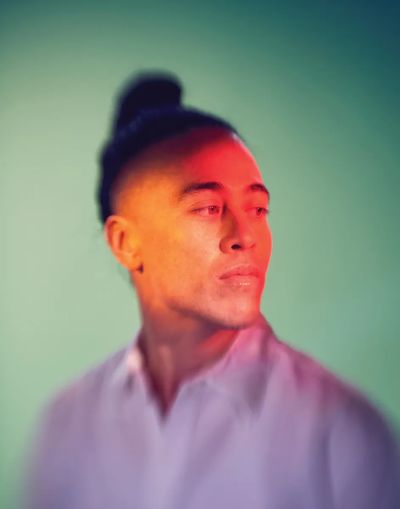
“Whose voices are heard, whose are silenced?” For Wu Tsang, who posed these questions
in a statement from 2012, such interrogations are as relevant to social justice as
they are to artistic expression.1 In both her practice and everyday life, she intertwines
aesthetic performance and political activism, from socially conscious performance
and video art to free legal assistance and safe-haven spaces for immigrants and marginalized
groups. As a filmmaker, multimedia artist, and performer, Tsang uses a notable range
of inspirations, materials, and settings for her work, of which recent examples include
video collaborations with scholar and poet Fred Moten and choreographed performances
for the stage.
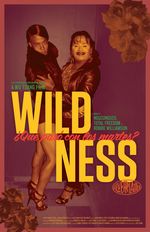
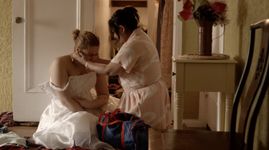
In Wildness (2012), her first feature-length film, Tsang blends fact and fiction through
documentary aspects and what the artist describes as “magical realism.”2 The film’s
title refers to a weekly club night that Tsang organized at Los Angeles’ Silver Platter,
one of the city’s original gay bars and a recognized refuge for the Latinx trans community.
By personifying the Silver Platter as a narrator, Tsang creates a composite character
through which to share the perspectives and experiences of the bar’s patrons. “I was
approaching it more as an activist trying to be a filmmaker,” Tsang said of the film.
“I felt there was an important story to tell about the lives of my friends at the
bar, many of whom were trans women and undocumented immigrants, often struggling with
overlapping invisibilities, and thriving despite intense conditions of violence and
policing.”3 The film’s combination of celebratory imagery and moving personal stories
allows Tsang to reconsider the notion of so-called safe space and the communities
it serves.
In multiple works, Tsang incorporates audiovisual citations to emphasize the processes—and
problems—of representation and recognition. Her 2008 video The Shape of a Right Statement,
also filmed at the Silver Platter, captures Tsang’s reperformance of a text published
in 2007 by autism rights activist Amanda Baggs. Standing before the Silver Platter’s
sparkling stage curtain and looking into the camera, Tsang recontextualizes part of
Baggs’s diaristic manifesto and speaks in a digitally modulated version of her own
voice: “The way I naturally think and respond to things looks and feels so different
from standard concepts…that some people do not consider it thought at all.” As Tsang
rehearses the text before the camera, her eyes begin to glisten with tears. By restaging
Baggs’s words as a form of video self-portraiture, the artist invites us to contemplate
the complexities of language and the ambiguity of subjectivity, an invitation that
may further prompt a reexamination of our beliefs about selfhood and individual experience.
The Museum of Modern Art. “Wu Tsang | MoMA.” Accessed May 21, 2023. https://www.moma.org/artists/47104.
Wu Tsang received a B.F.A. (2004) from the School of the Art Institute of Chicago
and an M.F.A. (2010) from the University of California at Los Angeles. Other films
by Tsang include We hold where study (2017), Girl Talk (2015), Damelo Todo (Gimme
Everything) (2010), and Shape of a Right Statement (2008). Tsang’s work has been exhibited
or screened at Tate Modern London, Kunsthalle Münster, Stedelijk Museum, the Whitney
Museum of American Art, the Solomon R. Guggenheim Museum, and the Museum of Contemporary
Art Chicago, among many other national and international venues.
MacArthur Foundation. “Wu Tsang.” Accessed May 21, 2023. https://www.macfound.org/fellows/class-of-2018/wu-tsang.
‘My first artwork was a short video called Shape of a right statement [2008], based
on a text by the autism-rights activist Amanda Baggs. At the time, I was organizing
queer clubs in Los Angeles. I used to throw a weekly party together with friends called
Wildness. It was in the context of performance and drag, although I wasn’t thinking
of myself so much as an “artist” or even a performer then. My creative practice took
shape through all these seemingly disparate activities – learning to sing opera, throwing
parties, and participating in trans activist movements. I was just doing what I loved,
and it was very community-driven.
‘My creative decisions were based on trying to capture a sociopolitical situation
that my life was very embedded in. I now make hybrid documentary/fiction films, and
performance has become the hinge for how I negotiate the politics of representation.
‘Perhaps the first well-known film of mine was Wildness, a feature documentary released
in 2012 about a trans Latinx bar in Los Angeles called Silver Platter. When I was
making it, I was approaching it more as an activist trying to be a filmmaker. I felt
there was an important story to tell about the lives of my friends at the bar, many
of whom were trans women and undocumented immigrants, often struggling with overlapping
invisibilities, and thriving despite intense conditions of violence and policing.
I had no idea what I was doing – I hadn’t gone to film school, but it felt so urgent
and necessary to make the film. I learned through doing – and making lots of mistakes.
Art Basel. “How I Became an Artist: Wu Tsang.” Accessed May 21, 2023. https://www.artbasel.com/news/wu-tsang-how-i-became-an-artist-art-basel.




 Learn more